Research
Inhalation Drug Development and Advanced Delivery
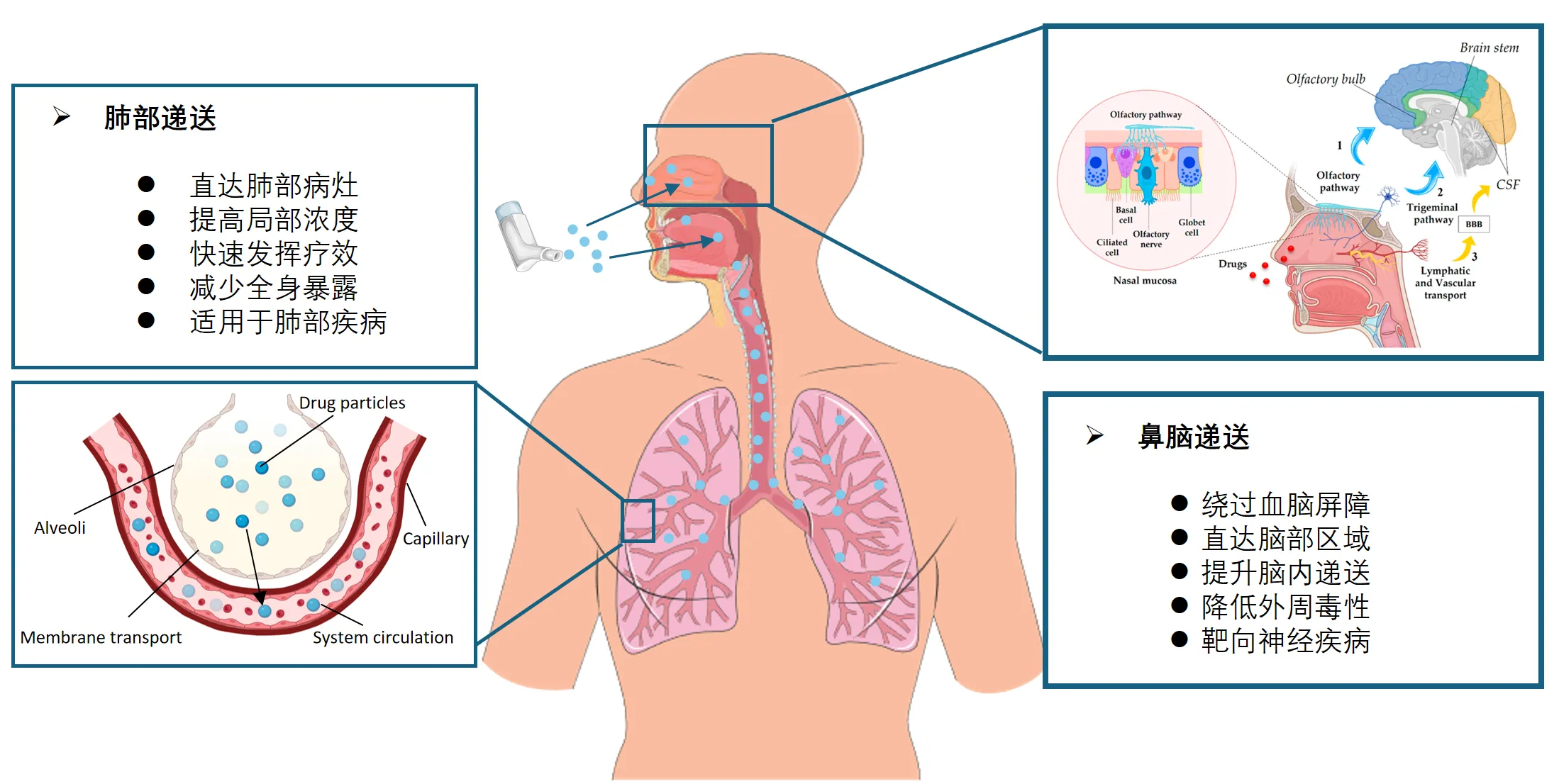
Research on dry powder inhalation and intranasal delivery, combining particle engineering, AI, inhalation device design, and ALI and lung organoid evaluation.
Overview
This research area focuses on dry powder inhalation and intranasal delivery, integrating formulation processes, artificial intelligence and pharmacological evaluation. We investigate particle agglomeration and dispersion, drug attachment and detachment, and particle functionalization. Spray drying and crystallization are used to explore spherical agglomeration and surface modification for respiratory delivery.
We develop lung-specific knowledge graphs to support drug candidate screening and investigate multi-signal smart inhalers for real-time monitoring of administration behaviour. Air–liquid interface (ALI) cell models and lung organoids provide in vitro platforms for evaluating targeting and local safety, connecting formulation development, smart devices and pharmacological assessment.
Research topics
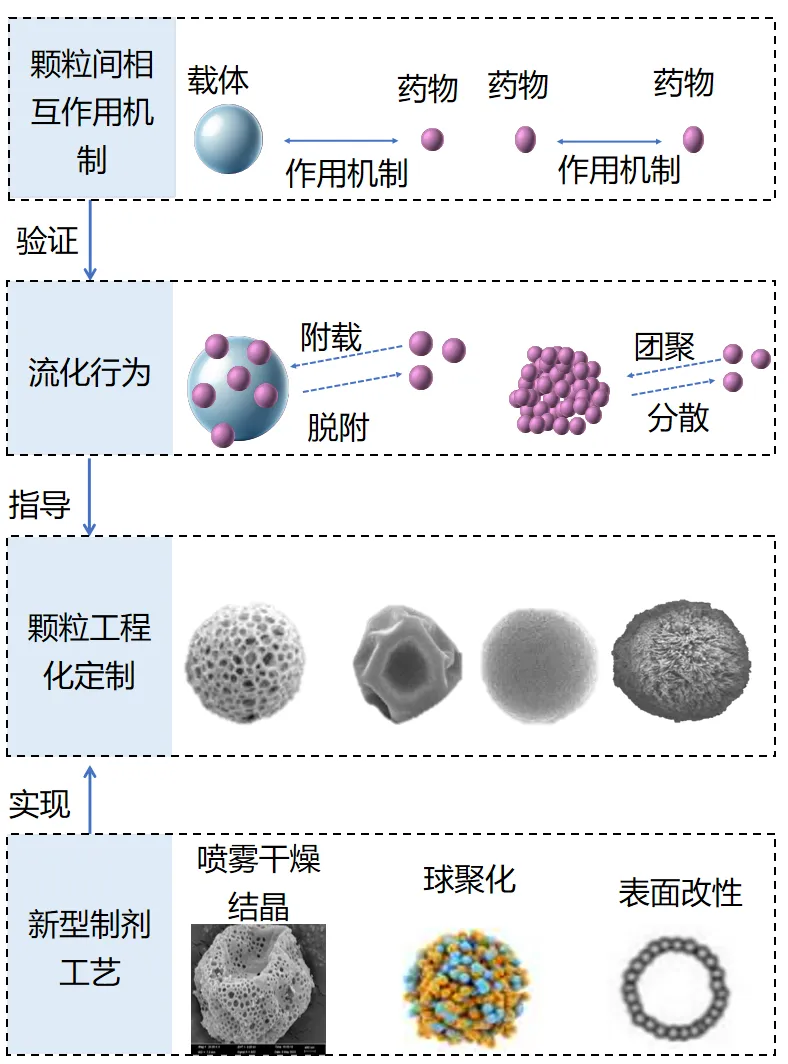
1. Particle functionalization and underlying mechanisms
We investigate particle agglomeration and dispersion, drug attachment and detachment, and fluidization behaviour to understand carrier–drug interactions. Spray drying and crystallization support spherical agglomeration and surface modification as routes to tailored particle properties.
Particle physicochemical properties influence dispersion and respiratory delivery. By linking mechanisms with process control, this work aims to improve control over particle properties and inform dry powder formulation development.
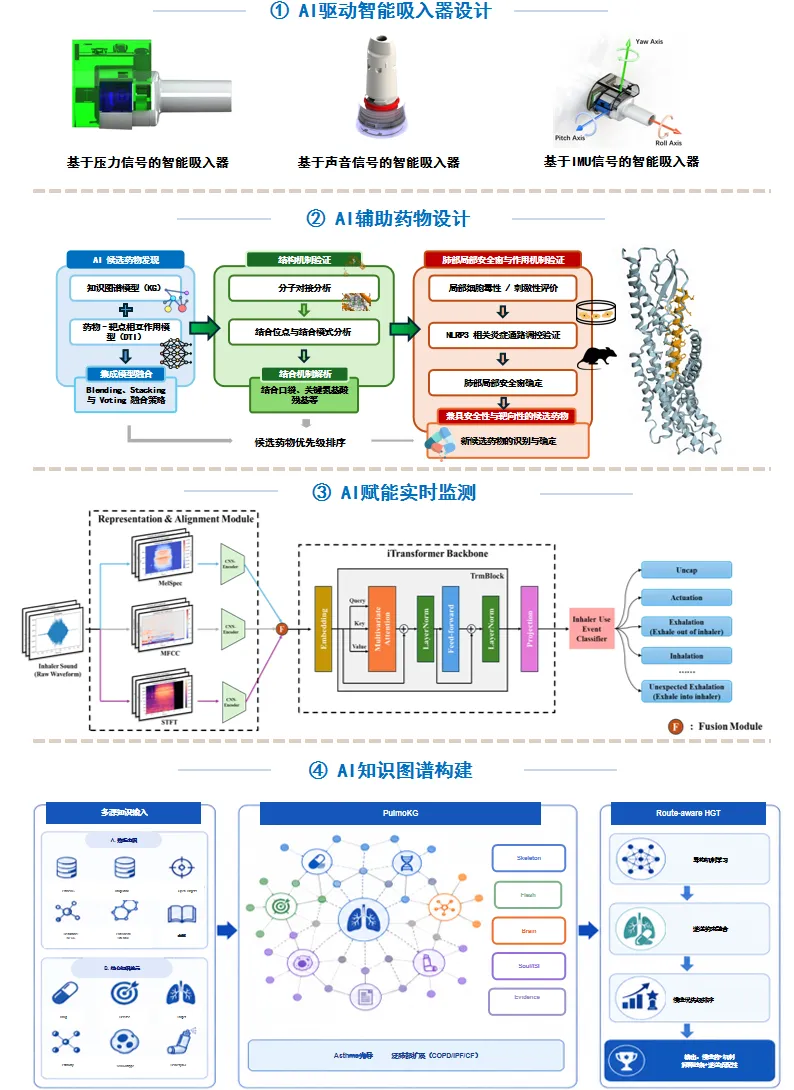
2. AI-enabled pulmonary drug development
This work comprises four modules: AI-driven smart inhaler design, real-time monitoring, AI-assisted drug design and knowledge graph construction. Multi-source biomedical data and deep learning are used to investigate inhaler-use sensing and monitoring alongside candidate molecule screening and analysis.
The research addresses lengthy screening processes, variability in inhalation technique and the cost of trial-and-error development. Connecting delivery devices, algorithmic analysis and drug screening aims to improve development efficiency and the administration experience.
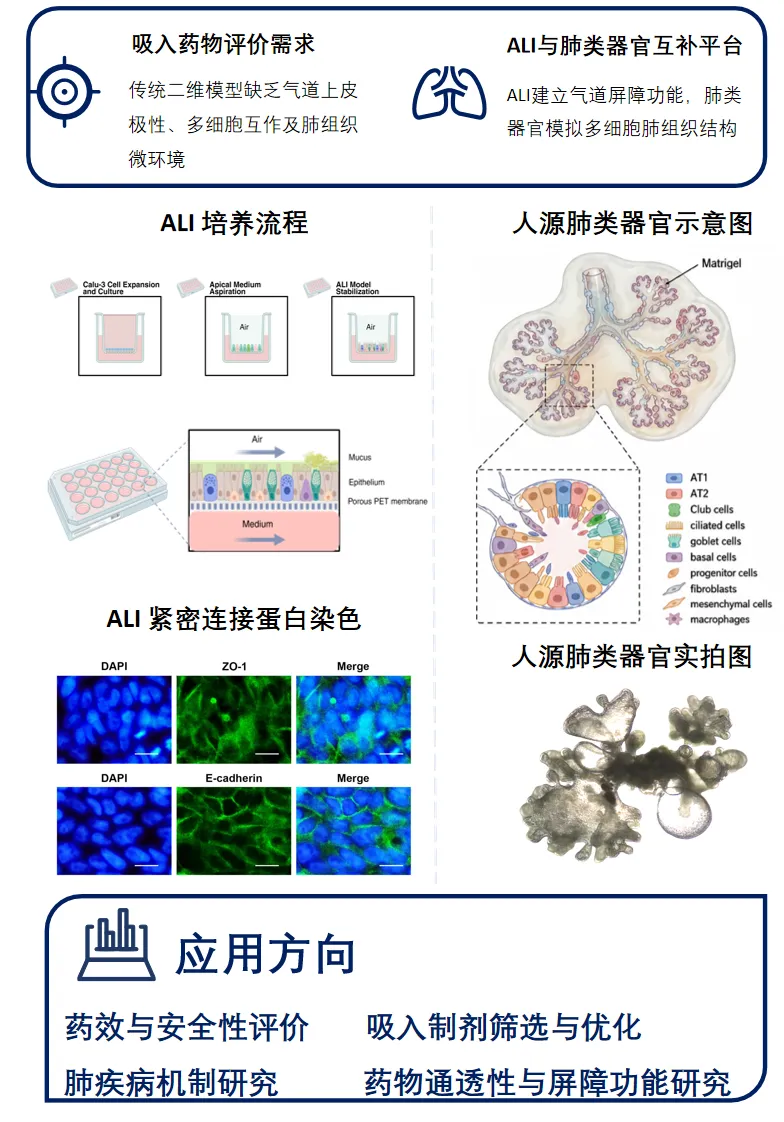
3. ALI and lung organoid platforms for inhaled drug evaluation
We develop an in vitro platform combining air–liquid interface (ALI) cell models and lung organoids to represent airway barriers and aspects of the lung tissue microenvironment. The platform supports studies of efficacy, local cytotoxicity and irritation for dry powder and intranasal formulations, including investigations of inflammatory pathways such as NLRP3.
Differences between animal and human lung physiology motivate complementary in vitro evidence for early safety and efficacy screening. This work aims to reduce reliance on animal experiments, identify potential formulation risks and provide more physiologically relevant tools for formulation screening and optimization.
4. Swirl-assisted dispersion and inhaler design
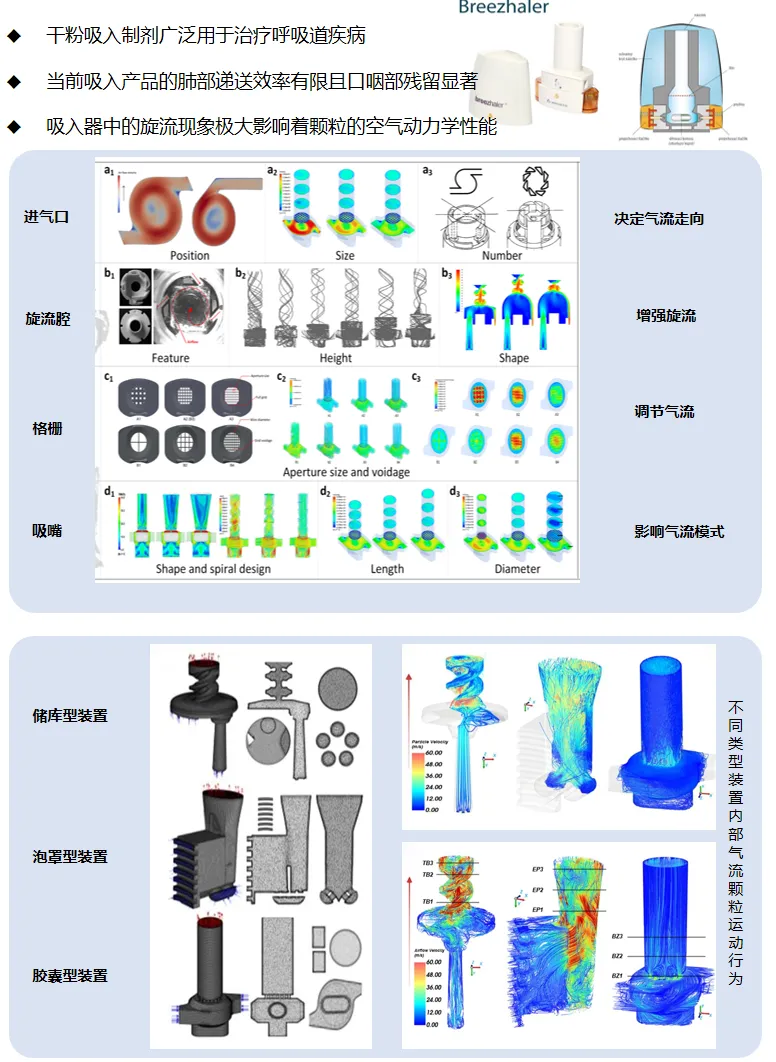
We investigate how internal swirling flow affects particle aerodynamics and deagglomeration in dry powder inhalers. Studies examine the effects of inlet, swirl chamber, grid and mouthpiece geometry on flow direction, swirl intensity and flow patterns, and compare air–particle behaviour in reservoir-, blister- and capsule-based devices.
Simulations are used to understand swirl-assisted deagglomeration and inform iterative device design. The objectives are to improve dispersion and pulmonary delivery while reducing oropharyngeal deposition.
5. Design and development of smart inhalable delivery platforms
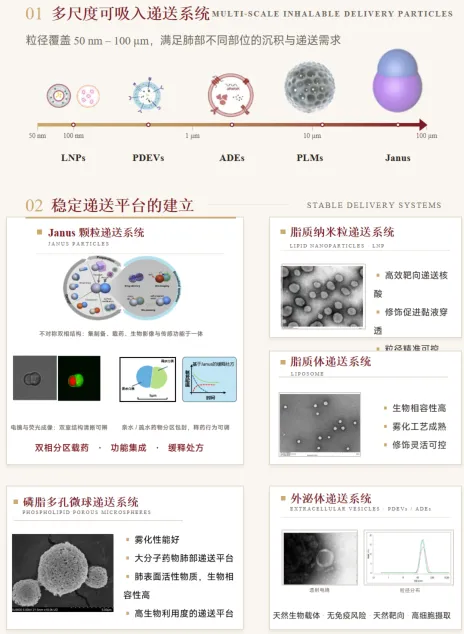
We explore carriers spanning 50 nm–100 μm, including lipid nanoparticles (LNPs), exosomes, porous phospholipid microspheres and Janus particles, and examine their suitability for deposition in different lung regions. Topics include compartmentalized loading in Janus particles, mucus penetration by LNPs, nebulized delivery of porous phospholipid microspheres and targeting with exosomes.
For nucleic acids, macromolecules and other drugs, we investigate delivery stability, aerosolization performance and pulmonary biocompatibility. The work explores strategies for chronic respiratory diseases such as pulmonary fibrosis and supports subsequent translational research.
6. Inhalation device development
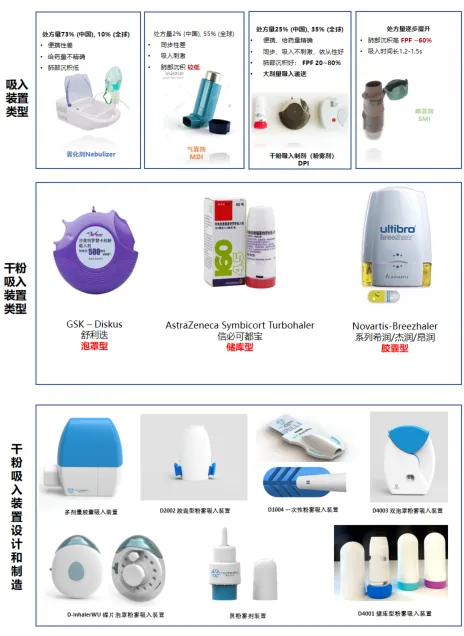
We study nebulizers, metered-dose inhalers and dry powder inhalers, considering portability, dosing accuracy and pulmonary deposition. Established commercial products serve as references for structural design and development, with attention to consistent administration and ease of use.
The work explores dedicated devices for dry powder and intranasal formulations to support the development of high-performance respiratory delivery devices in China.
Research Team
Research Area Lead

Team Members









Gege WangEngineer

Jiale ChenPhD Student